Choosing the Right Trunnion Rotary Table for Aerospace and EV Manufacturing
- This article explores the key factors manufacturers should consider when choosing a Trunnion Rotary Table for aerospace and EV production environments.
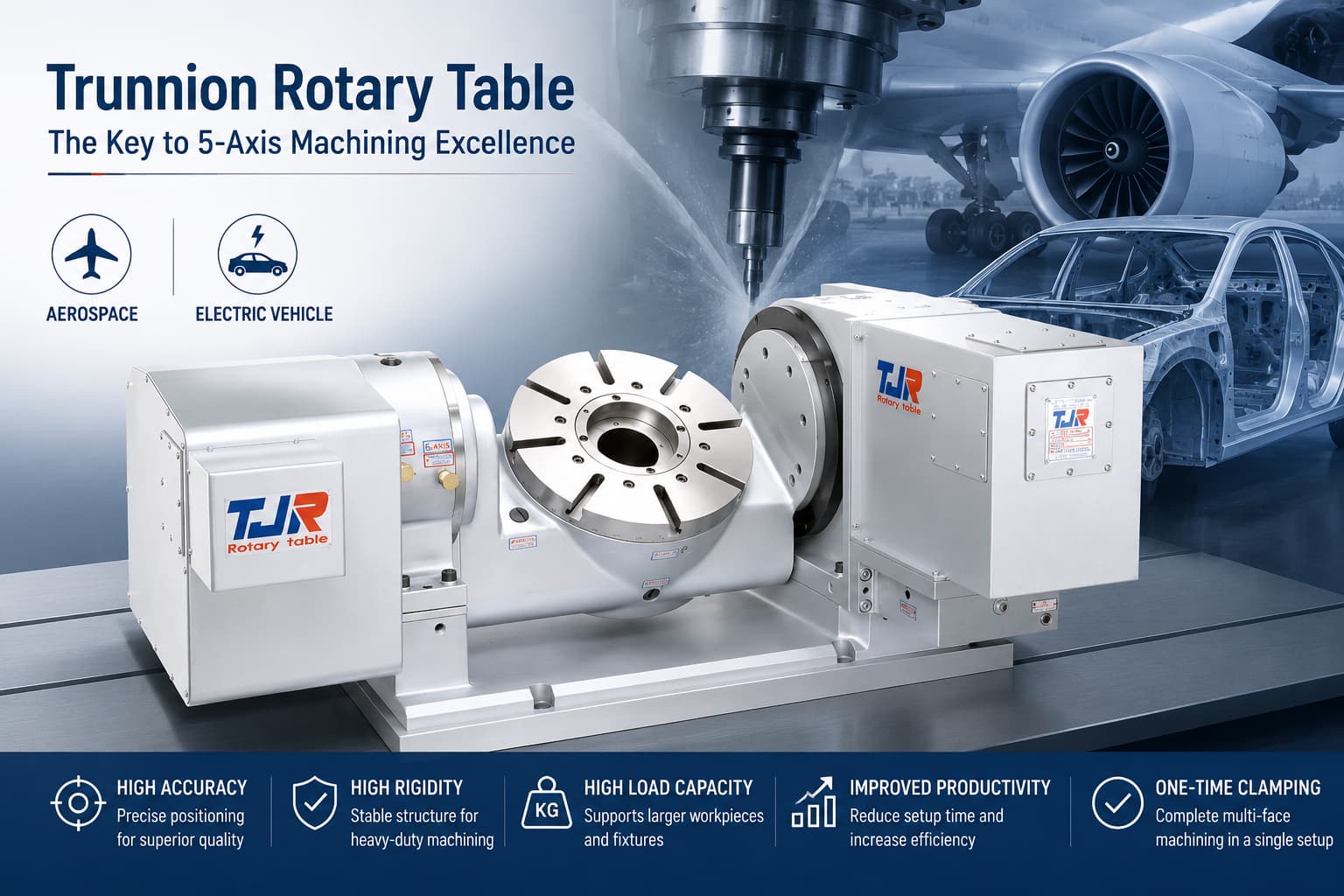
As aerospace and electric vehicle (EV) industries continue to push the boundaries of precision manufacturing, the demand for advanced multi-axis machining solutions is growing rapidly. Components such as turbine blades, impellers, battery trays, motor housings, and lightweight structural parts often feature complex geometries that cannot be efficiently machined using traditional 3-axis setups.
To meet these challenges, many manufacturers are turning to Trunnion Rotary Tables as a practical and cost-effective way to achieve true 5th Axis Rotary Table capability. However, not all trunnion rotary tables are created equal. Selecting the right solution requires careful evaluation of rigidity, accuracy, load capacity, and overall machining requirements.
This article explores the key factors manufacturers should consider when choosing a Trunnion Rotary Table for aerospace and EV production environments.
What Is a Trunnion Rotary Table?
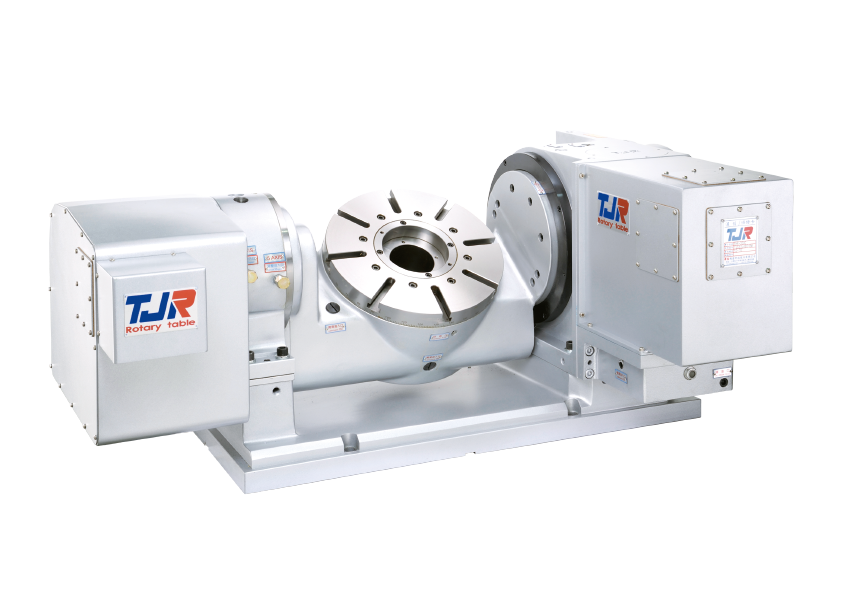
A Trunnion Rotary Table is a type of 5th Axis Rotary Table that supports the workpiece between two arms while providing both rotary and tilting motion.
Unlike single-arm tilting tables, a trunnion design offers dual-side support, creating a more rigid structure capable of handling heavier workpieces and higher cutting forces.
By adding two rotational axes to a machining center, a Trunnion Rotary Table enables:
- Multi-face machining
- Complex contour machining
- Reduced setup operations
- Improved positioning accuracy
- One-time clamping capability
These advantages make trunnion rotary tables especially valuable in industries where precision and productivity are critical.
Why Aerospace and EV Manufacturing Require Advanced Rotary Table Solutions
Although aerospace and EV industries produce different products, they share several machining challenges.
Complex Geometries
Modern aerospace and EV components frequently include:
- Curved surfaces
- Deep cavities
- Multi-angle features
- Lightweight structures
- Thin-wall designs
These geometries often require simultaneous multi-axis machining to maintain accuracy and surface quality.
Tight Tolerance Requirements
Aerospace components may require micron-level accuracy to ensure safety and performance, while EV manufacturers must maintain strict dimensional consistency for battery systems, motors, and structural assemblies.
Reduced Setup Time
Every additional setup introduces the possibility of alignment errors. A high-quality 5th Axis Rotary Table allows manufacturers to complete multiple operations in a single setup, reducing both cycle time and human error.
Key Factors When Choosing a Trunnion Rotary Table
Before investing in a Trunnion Rotary Table for aerospace or EV manufacturing, manufacturers should evaluate five critical factors. These factors directly affect machining accuracy, productivity, equipment lifespan, and overall return on investment.
For aerospace manufacturers and EV component suppliers, selecting the wrong rotary table can result in reduced accuracy, longer setup times, and increased production costs. Evaluating these five factors early can help ensure long-term machining performance and investment value.
| Factor | Why It Matters |
|---|---|
| Structural Rigidity | Maintains stability under heavy cutting loads and minimizes vibration. |
| Positioning Accuracy & Repeatability | Ensures consistent machining quality and dimensional precision. |
| Load Capacity | Supports larger workpieces, fixtures, and demanding machining applications. |
| Clamping Performance | Prevents workpiece movement and improves machining reliability. |
| Machine Compatibility | Allows seamless integration with existing CNC machining centers. |
Let's take a closer look at each factor and why it plays a critical role in selecting the right Trunnion Rotary Table.
1. Structural Rigidity
Rigidity is one of the most important considerations when selecting a CNC Trunnion Rotary Table.
In aerospace and EV applications, machining often involves:
- Titanium alloys
- Stainless steel
- High-strength aluminum
- Composite materials
These materials can generate significant cutting forces.
A dual-arm trunnion structure provides superior support compared to single-arm designs, helping to reduce vibration and maintain machining stability.
2. Positioning Accuracy and Repeatability
A rotary table is only as valuable as its ability to consistently position the workpiece.
Manufacturers should evaluate:
- Positioning accuracy
- Repeatability
- Backlash control
- Long-term stability
For high-value aerospace and EV components, even small positioning errors can result in rejected parts or costly rework.
3. Load Capacity
Not all trunnion rotary tables are designed for the same workpiece sizes.
Before selecting a system, manufacturers should consider:
- Maximum workpiece weight
- Center of gravity location
- Fixture weight
- Cutting force requirements
Choosing a table with sufficient load capacity helps ensure long-term reliability and stable machining performance.
4. Clamping Performance
A stable clamping mechanism is essential for maintaining accuracy during machining.
For heavy-duty applications, manufacturers should look for:
- High clamping force
- Stable locking performance
- Reliable hydraulic or pneumatic brake systems
A properly designed clamping system minimizes micro-movement and improves overall machining quality.
5. Machine Compatibility
Many manufacturers prefer upgrading existing machining centers rather than investing in entirely new machines.
When evaluating a 5th Axis Rotary Table, consider:
- Controller compatibility
- Servo integration
- Installation requirements
- Available workspace
A well-integrated system can significantly reduce implementation costs and downtime.
Common Applications of Trunnion Rotary Tables
A Trunnion Rotary Table is widely used in applications that demand multi-axis flexibility and high precision.
Aerospace Components
- Turbine blades
- Impellers
- Structural airframe parts
- Engine components
Electric Vehicle Components
- Motor housings
- Battery trays
- Lightweight chassis components
- Powertrain parts
Mold and Die Manufacturing
- Complex mold cavities
- Precision mold inserts
- Multi-angle machining operations
Medical Devices
- Orthopedic implants
- Surgical instruments
- Precision medical components
Why Worm & Gear Dual Arm Trunnion Tables Remain Popular
Among various 5th Axis Rotary Table technologies, Worm & Gear Dual Arm Trunnion Rotary Tables continue to be widely adopted by manufacturers.
Key advantages include:
- Proven mechanical reliability
- Excellent rigidity
- High torque transmission
- Stable clamping performance
- Cost-effective ownership
For many aerospace and EV applications, a well-designed worm gear trunnion table provides the ideal balance between precision, durability, and investment cost.
TJR Trunnion Rotary Table Solutions
As a leading manufacturer of CNC rotary tables and multi-axis machining solutions, TJR has extensive experience supporting manufacturers in aerospace, automotive, EV, mold & die, and high-tech industries.
TJR's Worm & Gear Dual Arm Type (Tilting Rotary Table) is designed to provide:
- High structural rigidity
- Stable positioning accuracy
- Reliable tilting and rotary motion
- Excellent machining stability
- Long-term durability for demanding production environments
Built with Taiwan's renowned manufacturing quality, TJR rotary tables help manufacturers achieve higher productivity while maintaining the precision required for complex machining applications.
Conclusion
Choosing the right Trunnion Rotary Table is a strategic decision that directly affects machining accuracy, productivity, and long-term manufacturing performance.
For aerospace and EV manufacturers, the ideal solution should provide:
- High rigidity
- Excellent positioning accuracy
- Reliable clamping performance
- Adequate load capacity
- Seamless machine integration
By carefully evaluating these factors, manufacturers can select a 5th Axis Rotary Table that not only meets current production requirements but also supports future growth and increasingly complex machining demands.
Looking for a Trunnion Rotary Table for Aerospace or EV Applications?
TJR offers a comprehensive range of Trunnion Rotary Tables and 5th Axis Rotary Table solutions designed for precision multi-axis machining. With decades of rotary table manufacturing expertise, TJR helps manufacturers improve productivity, reduce setup time, and achieve exceptional machining accuracy.
Contact TJR today to learn how our Worm & Gear Dual Arm Type (Tilting Rotary Table) can support your aerospace, EV, and advanced manufacturing applications.