5 Key Maintenance Tips to Extend the Lifespan of Your Rotary Table and Maintain Factory-Level Accuracy
- Five important maintenance practices that can help extend the lifespan of your rotary table and maintain stable machining accuracy.
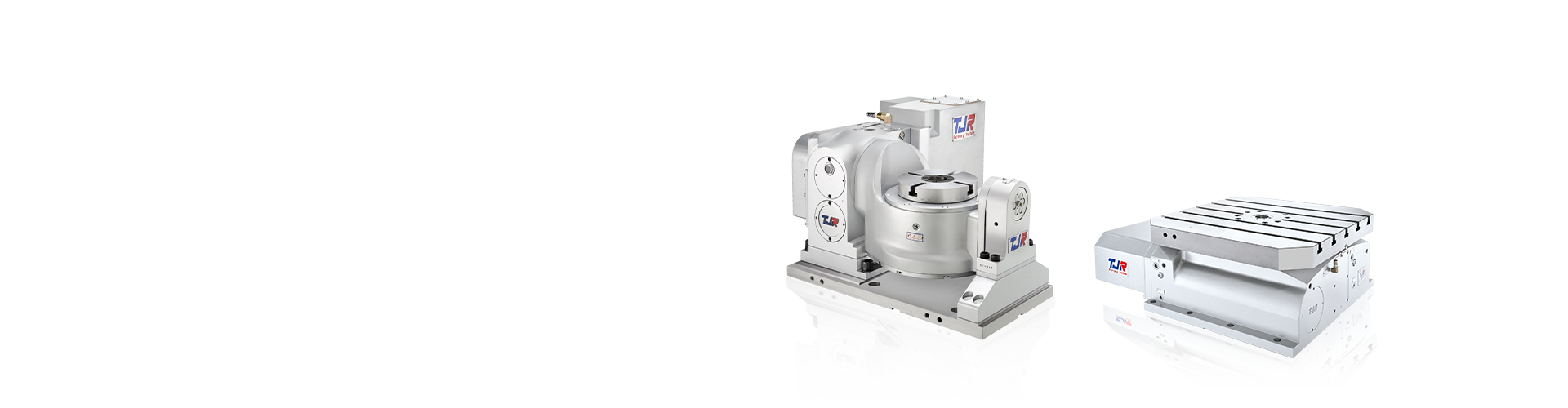
In modern CNC machining environments, rotary tables have become essential components for achieving higher precision, multi-angle machining capability, and improved productivity. Whether used in 4-axis machining centers, 5-axis machining systems, or advanced Trunnion Table configurations, rotary tables play a critical role in maintaining machining accuracy and production stability.
However, even high-precision rotary tables require proper maintenance to ensure long-term reliability. Without regular inspection and preventive care, factors such as insufficient lubrication, unstable hydraulic pressure, coolant contamination, and corrosion can gradually reduce positioning accuracy and shorten equipment lifespan.
For industries such as aerospace, automotive, EV manufacturing, mold & die, and high-tech electronics, maintaining factory-level precision over years of operation is especially important.
As a professional manufacturer of CNC rotary tables and Trunnion Table solutions, TJR not only provides high-performance products, but also supports customers through technical service, maintenance guidance, and knowledge base resources to help maximize long-term equipment performance.
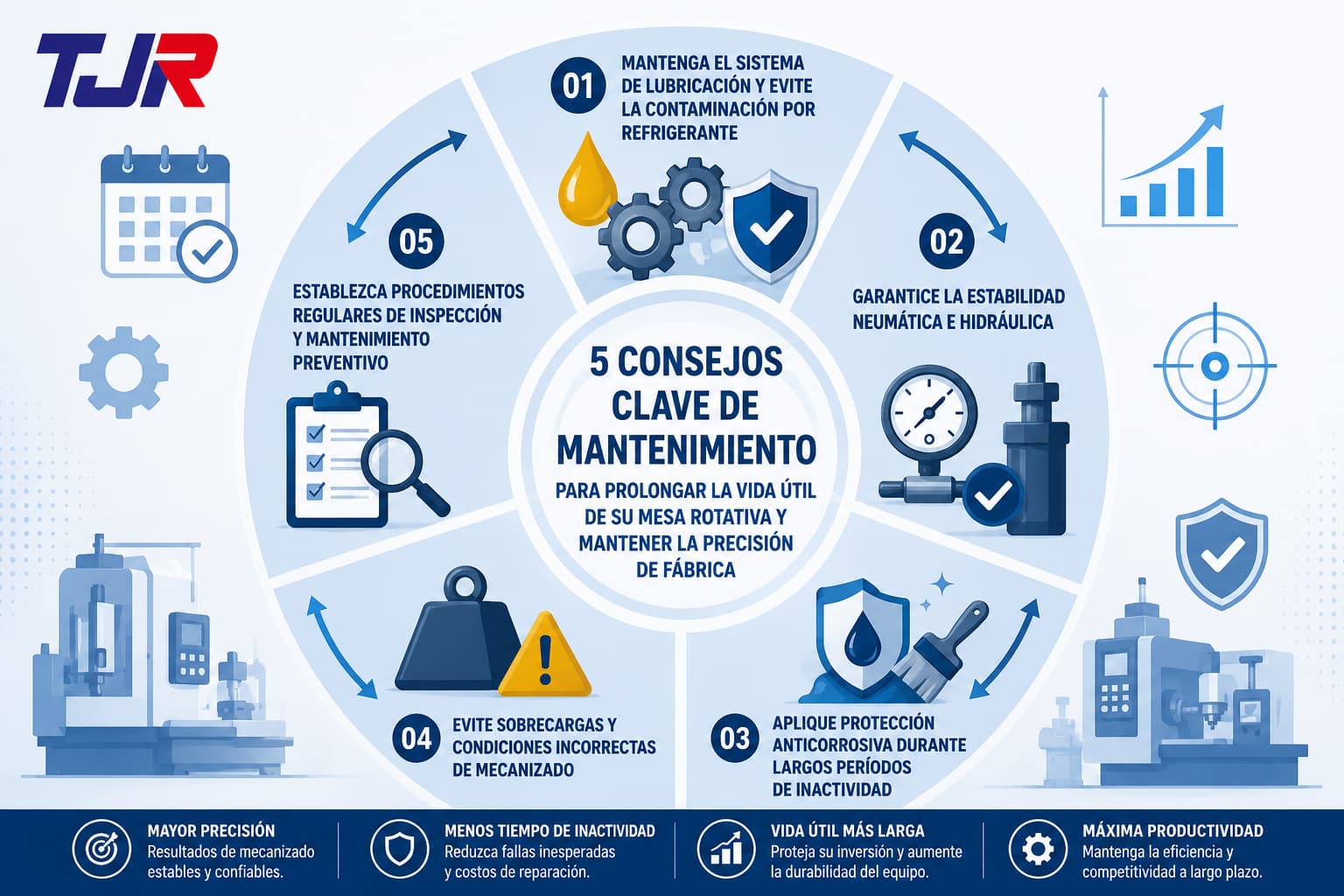
Below are five important maintenance practices that can help extend the lifespan of your rotary table and maintain stable machining accuracy.
1. Maintain the Lubrication System and Prevent Coolant Contamination
The lubrication system is one of the most critical factors affecting rotary table performance and longevity.
Internal transmission components such as worm gears, roller gear cam systems, bearings, and drive mechanisms rely on proper lubrication to minimize friction and wear. Insufficient lubrication may result in:
- Increased backlash
- Abnormal gear wear
- Excessive heat generation
- Reduced positioning accuracy
In addition, coolant contamination is a common issue in CNC machining environments.
If cutting fluid penetrates the internal structure of the rotary table, it may cause:
- Lubricating oil emulsification
- Reduced anti-rust performance
- Corrosion of bearings and gears
- Degraded lubrication efficiency
Manufacturers should regularly:
- Inspect seals for aging or damage
- Check lubricant condition
- Monitor for milky or contaminated oil
- Clean residual coolant around the rotary table
Regularly Check the Oil Sight Glass and Oil Level
Low oil levels may lead to insufficient lubrication, while abnormal oil level reduction may indicate internal leakage issues.
For this reason, checking the oil sight glass and oil level is an important part of rotary table maintenance and is strongly recommended in TJR’s service guidelines.
2. Ensure Stable Pneumatic and Hydraulic Pressure
For rotary tables equipped with pneumatic or hydraulic clamping systems, pressure stability directly affects clamping force and positioning accuracy.
Unstable air or hydraulic pressure may lead to:
- Insufficient clamping force
- Micro movement during machining
- Inconsistent repeatability
- Increased vibration during cutting
Over time, unstable pressure may also place additional stress on internal mechanical components.
Manufacturers should regularly inspect:
- Pressure stability
- Air or oil leakage
- Filter condition
- Pressure regulator performance
Especially in high-precision 5-axis machining applications, stable clamping performance is essential for maintaining machining quality.
3. Apply Proper Anti-Rust Protection During Long Shutdown Periods
Many factories overlook rust prevention when machines remain idle during holidays, maintenance shutdowns, or low-production periods.
However, high humidity, residual coolant, and environmental contaminants may accelerate corrosion on exposed metal surfaces.
Areas most vulnerable to corrosion include:
- Rotary table surfaces
- Fixture contact areas
- Bearing regions
- Exposed metal components
Before long-term shutdowns, manufacturers should:
- Remove chips and residual coolant
- Apply anti-rust oil
- Use protective covers
- Operate the machine periodically when possible
Proper rust prevention helps avoid startup issues such as abnormal noise, sticking, or accuracy deviation after extended downtime.
4. Avoid Overloading and Improper Machining Conditions
Even high-rigidity Trunnion Tables and heavy-duty rotary tables are designed with specific load limitations.
Excessive workpiece weight, unbalanced clamping, or aggressive cutting conditions may cause:
- Reduced bearing lifespan
- Structural deformation
- Excessive vibration
- Accuracy deterioration
In 5-axis machining applications, changing center-of-gravity positions can further increase mechanical stress.
Manufacturers should carefully monitor:
- Workpiece weight limitations
- Clamping balance
- Cutting parameters
- Tool path optimization
Proper machining conditions not only protect the rotary table, but also help extend spindle and tooling life.
5. Establish Regular Inspection and Preventive Maintenance Procedures
Many rotary table problems show warning signs before serious failure occurs.
Common early indicators include:
- Abnormal noise
- Increased operating temperature
- Minor vibration
- Reduced repeatability
By establishing preventive inspection procedures, manufacturers can identify potential issues before they lead to costly downtime.
Recommended maintenance practices include:
- Daily inspection checklists
- Lubrication replacement schedules
- Accuracy inspection records
- Preventive maintenance planning
Maintaining close communication with the original equipment manufacturer is also highly beneficial for long-term equipment reliability.
TJR’s Technical Support and After-Sales Service
As a professional manufacturer of CNC rotary tables and Trunnion Table solutions, TJR places strong emphasis not only on product performance, but also on long-term customer support.
Through comprehensive technical assistance and knowledge base resources, TJR helps manufacturers:
- Understand proper maintenance procedures
- Reduce unexpected machine downtime
- Maintain long-term machining accuracy
- Extend rotary table service life
For high-precision machining environments, long-term reliability is often just as important as machining speed and productivity.
Conclusion
A high-performance rotary table is not just a machining accessory—it is a critical component that directly affects machining accuracy, production stability, and overall manufacturing efficiency.
Through proper lubrication management, pressure system inspection, rust prevention, optimized machining conditions, and preventive maintenance practices, manufacturers can significantly extend the lifespan of rotary tables and maintain near factory-level accuracy for years of operation.
As multi-axis machining and high-precision manufacturing continue to evolve, establishing a complete rotary table maintenance strategy will become increasingly important for maintaining competitiveness in modern manufacturing environments.
If you would like to learn more about rotary table maintenance, 5-axis machining applications, or technical support solutions, contact TJR for professional assistance and expert recommendations tailored to your machining needs.